
Last Updated on 9 March, 2026 by Cara Sutra
Parenting is different for everyone, but what most parents agree on is that it isn’t easy. The practical and emotional challenges shift through the years as you raise a child from newborn needs to independent adulthood and, one day, watch them fly the nest. That’s how it usually goes, anyway. But when you’re raising neurodivergent children, all the usual expectations have to be let go. I haven’t written about being a parent to neurodivergent children here on my blog, but now, as I enter a reflective period of life brought on by recent personal health changes, it’s time. Time to stop pretending life has distinct categories which can be neatly labelled or separated into boxes.
This is my introductory piece to a new area of my blog in which I’ll talk about Motherhood in Motion: Parenting, Neurodiversity & Letting Go. This series sits within my wider Life Unscripted writing, where I share the parts of my life which aren’t typically written about on a sex blog, but which I refuse to censor from my writing any longer. Today I’m giving you a brief overview of what parenting in a neurodivergent household looks like for us. How it started, how it’s going, and my hopes and concerns for the future.

Twenty-two years ago, I had an office job. Twenty-one years ago, I became a mother. Seventeen years ago, I started sex blogging. Thirteen years ago, I became a mother for the second time; this time to a neurodivergent child. Life is complicated, then parenting comes along, and parenting neurodivergent children adds a whole new layer of complexity.
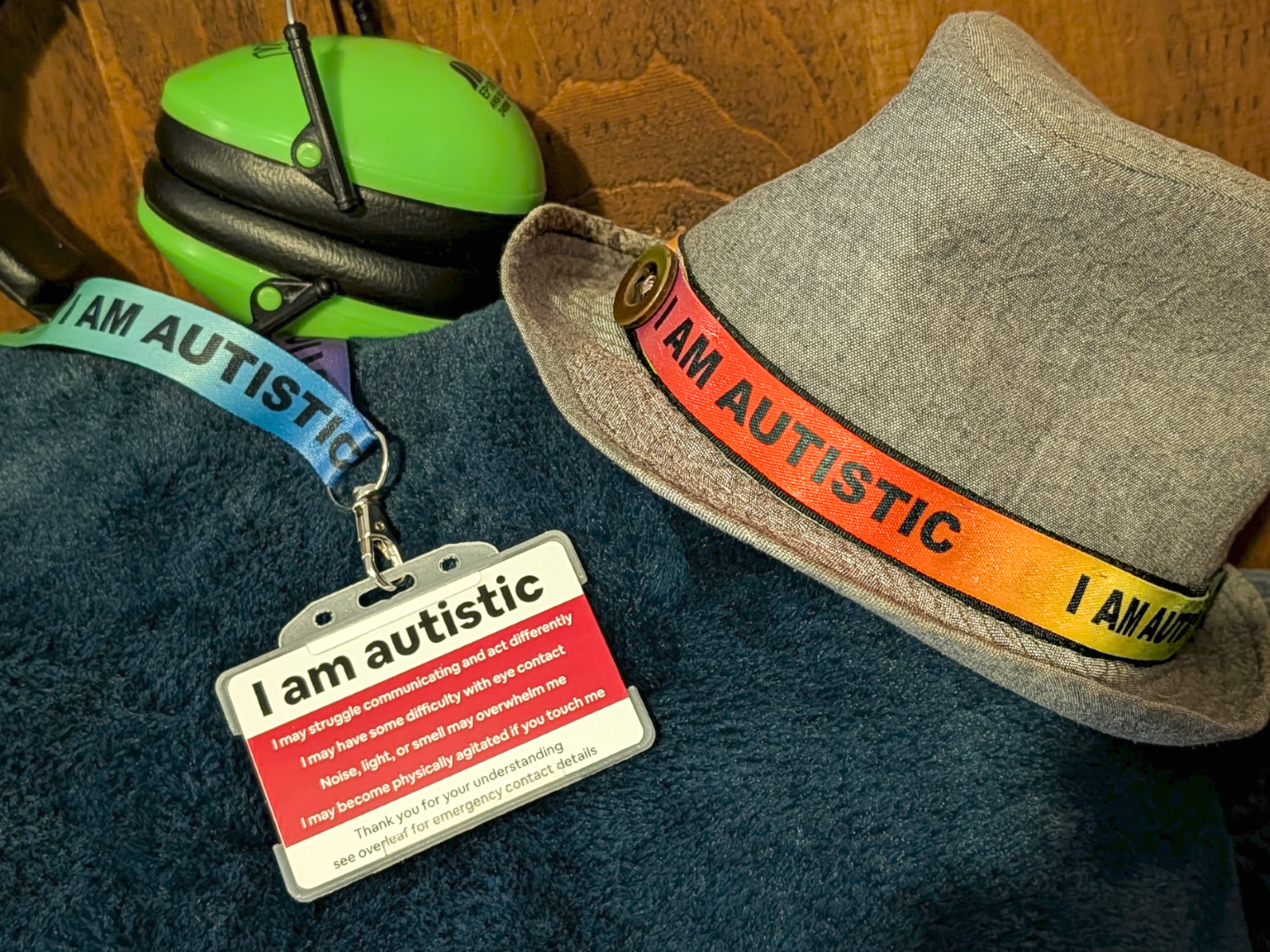
There’s a lot of neurodivergence in my life. A large percentage of my friends are on the spectrum. My husband is autistic, so are two of our three sons, one of whom also has ADHD. For clarity, our sons are aged 21, 20, and 13. Middle son is the birth child of my husband and his ex-wife, who has since died due to alcoholism. I adopted this wonderful child, who is both autistic and has ADHD, in the summer of 2023.
This middle child, and my eldest son (who is neurotypical) have recently spread their wings and flown the nest. They are both independent, healthy, employed and in loving relationships with partners my husband and I get on very well with. We’re incredibly proud of them all.
So, at home right now, it’s just my husband and I and our youngest son, who has recently become a teenager. He is diagnosed with level 3 autism, and we’ve known he was autistic ever since he showed typical milestone regression signs at around 18 months old. Toddlerhood, nursery and school, and navigating the SEND (Special Educational Needs and Disabilities) system here in the UK to access the support he needs via an EHCP (Education, Health and Care Plan) has been… challenging.
Parenting in a neurodivergent household is intensely emotional, often feels quite lonely, and is thoroughly exhausting. Day-to-day life is very different from being the parent of a neurotypical child, which I have experience of with my eldest, so I’m able to directly compare. Instead of a child hitting broad universal milestones from birth to eighteen, you love and parent a child who not only swerves those milestones, they’re on a different path altogether. I strongly believe that neurodivergence isn’t necessarily a disability (although I’m aware that sometimes it is) or having a less ‘able’ brain than neurotypical folk, but rather it’s having a different operating system entirely.
My husband and I are constantly learning how we can help our youngest son navigate life as a neurodivergent person in a primarily neurotypical world. We face the future without the usual assumptions that our child will become completely independent, leave school and gain employment, leave home and be able to live by himself, perhaps fall in love and one day start a family. There are no such assumptions or expectations when you parent a neurodivergent child. We don’t know what the future holds for him, or for us. All we can do is continue to support him as much as we can, love him unreservedly, and continue to be his fiercely protective advocate, accessing every single bit of help and support available for him whether at home or at school.
When our son was 18 months old, he stopped giving people eye contact. He stopped being smiley, stopped waving at people. His babbling, which usually leads to communicative speech in typical children, also stopped. He went from eating a wide variety of foods to refusing to eat anything but bourbon biscuits and raisins. Anxious about his health, but strongly suspecting autism, we contacted our health visitor. She referred us to our local CAMHS (Child and Adolescent Mental Health Services) support, with a visit from a speech and language therapist booked in. Because official diagnosis wouldn’t take place until after his fifth birthday, he was placed under what’s called ‘watchful wait’; basically, this child is likely neurodivergent but won’t go through official diagnosis procedure until they’re 5 years old.
The speech and language therapist visited regularly for a few years, up to when he started nursery. Despite her best efforts, our son wasn’t giving any eye contact and wouldn’t verbally communicate. This isn’t the same as not talking at all, but any words spoken were mimicry of TV shows or songs and phrases from his electronic toys, never to communicate anything. We’ve since learned that he’s a gestalt language processor, and his echolalia and script mimicry were signs of this. He couldn’t ask us for anything; I became some psychic wonder of a mother who ‘just knew’ what he wanted or needed at all times.
I would focus on him every single minute he was home, and worry about him every single minute he was at nursery, then after he fell asleep at night I’d research ‘autistic children symptoms and needs‘ on the internet and often cry with worry that he might never talk to us, or anyone. Whilst other mothers were jokily complaining online about their child’s incessant chatter, I was trying to come to terms with perhaps never hearing my son call me Mum. And feeling selfish and ungrateful all the while, because it wasn’t about me. I felt I should be happy that he was so strong and healthy otherwise. It’s only autism, he isn’t ill. These thoughts carried me through the days, but at nights I confess I’d often surrender to the fears for his future, and the grief of my present.
He coped in the typical nursery setting and eventually started mainstream school – with an EHCP in place, that I’d fought tooth and nail to obtain for him. When he turned 5, he was duly assessed by CAMHS and officially diagnosed as autistic.
Mainstream primary school was fine for a few years. Not easy, by any means; he needed high levels of one-to-one support which went beyond the school’s usual levels for students. My son started primary school still wearing nappies, because he wasn’t following the typical milestones chart. He showed no signs of being aware of when he needed the loo, and needed nappies through the day and, of course, through the night, too.
Not to make it about me, but it felt a little like I was being taught a lesson. I’m ashamed to admit that with my eldest, I’d been one of those mothers who judged other mums when their child was still sucking on a dummy or wearing nappies beyond babyhood. But it’s so easy, I thought. My son slept through the night from 8 weeks old. My son threw his dummy away when he was around a year old. My son grew out of nappies before starting nursery; he bypassed the potty and went straight to using the toilet. If your child isn’t like that, well, you must be a lazy, self-absorbed parent. And then I had my second child.
Life sure has a sense of humour at times.
When my youngest son reached Year 4 of primary school, a member of staff gently broached the idea of him attending special school. The other students were gearing up for their transition to mainstream secondary school, after completing Year 6 and their SATs. He was out of nappies in the day by then, and slowly becoming dry through the nights. His speech had progressed the point of saying a few communicative words, including, to my delight, “mummy”. However, he certainly wasn’t at the point where he’d sit through tests, never mind understand or care about them. We were all certain he wouldn’t be able to attend a mainstream secondary school, where there would be no provision of a one-to-one helper for him like there’d been at primary. And moving from a mainstream primary to a special secondary was much more complex, and much less likely to happen, than moving from a special primary to a special secondary.
I was resistant at first, mostly because I didn’t know what special schools were like. I realise now that I held some pretty offensive and outdated notions that children in special schools did nothing but finger paint or play with Play-doh all day, rather than following academic classes guided by the National Curriculum. Thank goodness I’d at least learned to be open-minded, because after my husband and I went to look around the local special primary school, we knew it was perfect for our son.
From there, he duly moved without any education system complications or battles, to the nearby special secondary school. And that’s where he’s been for the past few years. It’s an outstanding school, and it isn’t only us who think so; that’s the school’s OFSTED rating.
We recently attended the annual review of our son’s EHCP, which is a face-to-face meeting at school to go over all aspects of his care plan and ensure all his needs are being met. Discussion also looks at whether he’s happy, at school and at home, and what extra support he might need. There are soft goals set, ‘outcomes’ which are less like firm targets and more like a scaffold that the school staff and we, his parents, do our best to help him achieve. Over the past 12-months, these included expanding his verbal communication, more carefully structured support when he has meltdowns (and how to avoid or spot them starting), and supporting him learning how to shower by himself. His verbal communication has improved beyond anything we thought possible for him, and he’s even able to shower independently now, along with taking care of all his toileting and dressing needs by himself.
Later this year he’ll be going on his first residential trip with this wonderful school; five whole days away from home, away from mum and dad, having a wonderful time with staff and peers learning outdoor skills and enjoying activities in nature.
It isn’t all resolved, joyful or easy now. These are just a few of the highlights. As he has recently turned teenager, we’re all facing the challenges of hormonal disturbance and puberty in a neurodivergent child. Our son is getting much taller, and much stronger; his meltdowns were loud and powerful enough when he was a toddler, but as an almost 14-year-old they can be quite intimidating and frightening. As you’ll know from my recent blog posts, this all sits alongside my personal healing journey as I attempt to mend my mind after a life of trauma and living as a deaf person, plus navigate a new life in perimenopause and with chronic illness. No, it certainly isn’t easy.
My youngest son has my whole heart. People regularly say they’d die for their children, but until that’s required, I’m determined to live for mine. That means being the best mother to him that I possibly can. It has meant facing up to the fact that I was numbing myself with drink, using alcohol as a readily available trapdoor to oblivion, and choosing the sober path over the one which ends in darkness. It means confronting my family’s generational trauma, and deciding it ends here. Attending weekly therapy to gently unpack the boxes stacked in the far corners of my mind, overturning the contents and dealing with the difficult fallout. Unravelling the trauma, loosening and freeing the tight knots one by one.
It’s all work, but it’s all worth it. There’s a lot of invisible labour, not just in my personal healing journey but in trying to parent a neurodivergent child, alongside a neurodivergent partner. There is a lot of mental tracking of triggers, detailed planning of events, complicated admin to ensure ongoing support through official channels. The tightening of my chest when I hear that he’s struggled to cope at school, the searing pain behind my eyes and intense sadness when he doesn’t cope at home; when he screams and throws things during his autistic meltdowns.
Then there are the things rarely spoken about amongst parents of neurodivergent children. The worries for their future. Will he ever be fully independent? Or will he need to live with us forever? The financial implications, but beyond that, the emotional and physical costs. Will he ever be able to financially support himself? Will he ever fall in love? Is there someone out there who will understand him, who will ever love him as much as we do? What happens if we die, as we’re certain to do, one day? Will he be ok? Will he survive? Who will take care of him? Will he be taken advantage of? How will he cope with losing his mummy and daddy?
I had to take a break there.
It was too difficult to type through the tears that always come when I let myself face those questions.
It’s difficult to explain just how different parenting a neurodivergent teen is, compared to parenting a typical child, which is emotionally and physically complex enough. It would be hard even without the additional layers of trauma processing, disability, and chronic illness that I’m dealing with at this stage of my life. There are overwhelming layers of grief; grief for me and things I’ve lost and things I never even had in my own life, and grief for my son, the experiences he hasn’t been able to have, and the relationships and life experiences he will likely miss out on in the future, due to his differences. There is the balancing act of carrying all this raw and intense vulnerability in your heart, whilst being the strongest, fiercest advocate and protector of your child in the world. Their impenetrable shield against an unforgivingly neurotypical world. The crushing sadness when they struggle, the exhilarating highs of deep pride as they conquer challenges.
The bone-deep exhaustion of carrying all of this since their birth, throughout all the years to where we find ourselves now, in hormonally disruptive teenagerhood. Like they say, the days are long, but the years are short.
This has been my introduction to a new part of my blog, another area where I stop pretending I’m one-dimensional and start embracing all the different aspects of my life. This is the introductory post to my Motherhood in Motion series, a sub-series of my main Life Unscripted series of personal posts.
In this Motherhood in Motion series I’ll confront, reveal and analyse various aspects of the parenting part of my life. This will include themes like:
- Parenting through intergenerational trauma and attempting to break the cycle
- Raising a teenager with autism
- Balancing being a mother with being a sex blogger
- Being a mother to adult children who have grown and flown, but still need you
- The mental (and physical) load of being wife and mum
- Coping through tough times of motherhood
- The rarely spoken about baby-related grief that comes with menopause
- Understanding that my children don’t owe me grandchildren
I hope these posts resonate with some of my readers and help you feel a little less alone. For others, I hope it gives you more of an insight into my life behind the scenes of being a sex blogger.